

Dark Chocolate Protein Bark
Welcome to our world of tasty treats for health-conscious foodies! We’re excited to share a simple yet indulgent protein bark recipe. It’s not only delicious but also full of nutrients.
Imagine a rich, dark chocolate dessert that’s both healthy and satisfying. Our healthy dessert recipe is easy to make. You can also customize it to fit your taste.
This tasty treat is easy to make and perfect for snacking or as a post-workout reward. Let’s start this culinary adventure and discover the benefits of this protein-enhanced dessert!
Key Takeaways
- Easy-to-make protein bark recipe
- Customizable to suit your taste preferences
- Packed with nutrients and protein
- Perfect for health-conscious foodies
- Great for snacking or as a post-workout reward
What Makes Protein-Enhanced Chocolate Treats Special
Dark chocolate and protein are a perfect pair that’s changing the health food scene. The popularity of protein-enhanced desserts is soaring. Let’s explore why they’re so unique.
The Rise of Protein-Enhanced Desserts
These desserts are loved by those who care about their health but also enjoy tasty treats. They offer a guilt-free indulgence packed with protein. They’re great for after workouts or when you need a sweet fix.
The trend is fueled by the need for high-protein foods that taste good. Protein-enhanced desserts are a tasty way to increase your protein intake.
| Benefits | Dark Chocolate | Protein |
|---|---|---|
| Nutritional Value | Rich in antioxidants | Supports muscle growth and repair |
| Taste | Decadent and rich | Versatile, can be flavored |
| Health Benefits | Improves heart health | Aids in weight management |
Benefits of Combining Dark Chocolate with Protein
Mixing dark chocolate with protein makes a treat that’s both decadent and nutritious. Dark chocolate is full of antioxidants, and protein helps muscles repair and grow. This snack is fulfilling and supports your health and fitness goals.
Adding protein-enhanced desserts to your diet lets you enjoy tasty treats while boosting your health and fitness. It’s a great choice for anyone who wants to indulge without feeling guilty!
Essential Ingredients for Dark Chocolate Protein Bark
Are you ready to make Dark Chocolate Protein Bark? Let’s explore the key ingredients you’ll need. The quality and type of ingredients greatly affect the taste, texture, and nutrition of your bark.
Selecting the Right Dark Chocolate
Choosing the right dark chocolate is key. It’s the base flavor and texture of your bark. Opt for dark chocolate with at least 70% cocoa solids for health benefits and taste. Brands like Ghirardelli, Lindt, and Green & Black’s are popular choices.
Consider the cocoa bean origin and processing methods. These factors can greatly influence the flavor.
Choosing Your Protein Source
The protein powder you pick should match your dietary needs and preferences. Whey, casein, and plant-based proteins like pea or rice are common choices. Look at the protein content, amino acid profile, and any added ingredients.
Top-rated protein powders include Optimum Nutrition Gold Standard 100% Whey and NOW Sports Pea Protein.
| Protein Type | Protein Content per Serving | Amino Acid Profile |
|---|---|---|
| Whey Protein | 25g | Complete amino acid profile |
| Pea Protein | 20g | High in BCAA |
| Rice Protein | 15g | Hypoallergenic |
Optional Add-ins and Toppings
Optional add-ins and toppings can enhance your Dark Chocolate Protein Bark. Try nuts like almonds or walnuts, dried fruits like cranberries or cherries, or candy pieces like M&M’s. Sea salt or nut butter can also add flavor.
Experiment with different combinations. Some favorites include nut butter and sea salt, dried cranberries and white chocolate chips, or espresso powder and chopped nuts. Tailor your bark to your liking!
Tools and Equipment You’ll Need
Making Dark Chocolate Protein Bark is easy with the right tools. Having everything ready makes the process fun and smooth.
Basic Kitchen Essentials
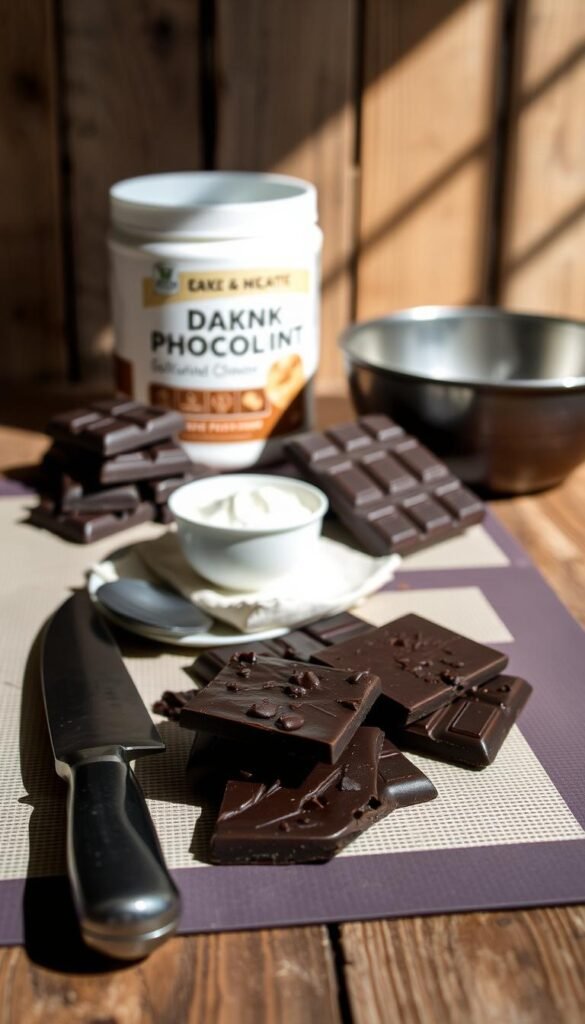
You’ll need basic kitchen tools to start. A double boiler or a microwave-safe bowl is key for melting chocolate. If using a double boiler, make sure the bowl fits well.
A spatula is essential for mixing. You’ll also need a parchment-lined baking sheet to lay out your bark.
Optional Specialized Equipment
For an even smoother process, consider specialized tools. A silicone spatula helps with scraping and mixing. It’s great for folding in protein powder.
Also, a marble slab or a cold surface can set your bark fast. This gives it a smooth finish.
Preparing Your Workspace and Ingredients
Before we start making Dark Chocolate Protein Bark, let’s get our workspace ready. A clean and organized area makes the process fun and stress-free. It’s key for making this tasty treat efficiently.
Setting Up for Success
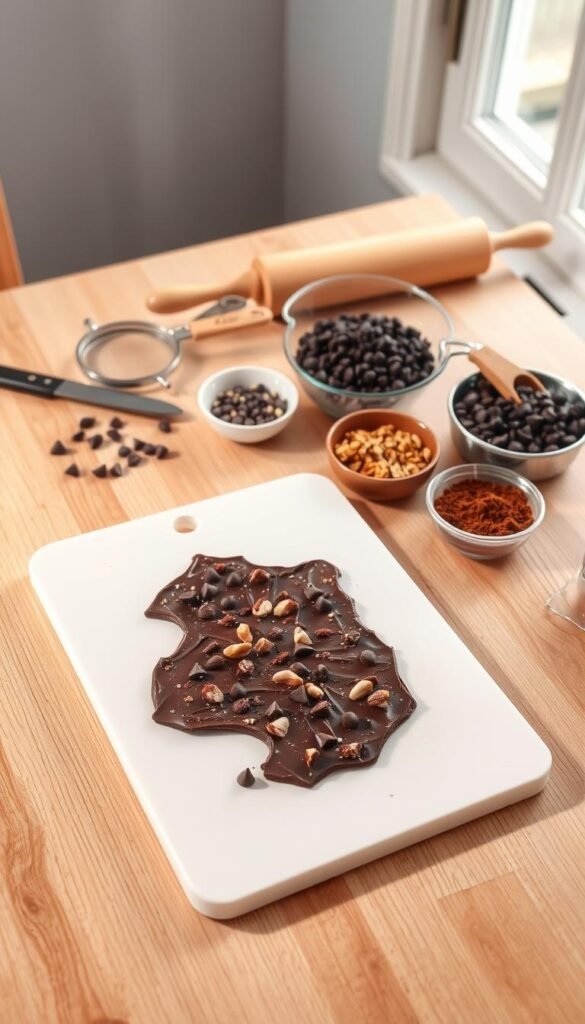
Begin by clearing a large, flat surface in your kitchen. This will be your protein bark assembly line! Have all the tools you need nearby, like a double boiler or a microwave-safe bowl, a spatula, and parchment paper on a baking sheet. As “A cluttered workspace can lead to a cluttered mind,” a tidy area helps you stay focused.
Measuring and Prepping Ingredients
Now, let’s measure and prep our ingredients. Accurate measurements are key for the perfect flavors and textures in your Dark Chocolate Protein Bark. Take your time to measure out the dark chocolate, protein powder, and any extra ingredients. Remember,
“Measure twice, melt once!”
Getting your ingredients ready in advance makes the assembly process smoother and more fun.
By following these steps, you’ll be on your way to making a delicious and healthy Dark Chocolate Protein Bark. You’ll love it!
Step-by-Step Guide to Making Dark Chocolate Protein Bark
Now that we have our ingredients ready, let’s make our Dark Chocolate Protein Bark! This process is easy and fun. By the end, you’ll have a tasty and healthy treat.
Melting the Chocolate Properly
The first step is to melt the chocolate. Use a double boiler or a microwave-safe bowl. If using a microwave, heat in 30-second increments, stirring between each heating, until smooth. Be careful not to overheat, as this can cause the chocolate to seize. Properly melted chocolate is key to a smooth bark.
For the best results, use high-quality dark chocolate with at least 70% cocoa content. This not only tastes better but also provides more health benefits. Once melted, let it cool slightly before proceeding to the next step.
Incorporating the Protein
Next, we need to add the protein powder to the melted chocolate. Start by adding a small amount of protein powder to the chocolate and mix well. Gradually add more protein powder until you reach your desired protein content. It’s essential to mix thoroughly to avoid lumps. You can adjust the amount of protein powder based on your dietary needs.
If your mixture is becoming too thick, add a small amount of coconut oil or almond milk. This step is key for ensuring your bark is not too dense or chalky.
Spreading and Adding Toppings
Now, spread the chocolate-protein mixture onto a baking sheet lined with parchment paper. Use a spatula to spread it evenly to your desired thickness. This is also the stage where you can get creative with toppings! Add your favorite nuts, seeds, or dried fruits on top. Be quick, as the mixture will start to set.
Setting and Breaking the Bark
After adding your toppings, let the bark set at room temperature or in the refrigerator for about 30 minutes. Once set, use your hands or a sharp object to break it into pieces. You can also cut it into uniform bars if you prefer. The bark is now ready to be enjoyed or stored in an airtight container.
By following these simple steps, you’ll have a delicious Dark Chocolate Protein Bark. It’s perfect for snacking or as a post-workout treat. Enjoy the process and the delicious outcome!
Troubleshooting Common Issues When Making Protein Bark
Don’t worry if your protein bark doesn’t turn out perfectly on the first try. We’ve got some troubleshooting tips to help! Making Dark Chocolate Protein Bark can sometimes be a bit tricky. But with a few simple adjustments, you’ll be enjoying your delicious treat in no time.
Fixing Seized or Clumpy Chocolate
If your chocolate seizes or becomes clumpy, it can be a real disappointment. This often happens when the chocolate is overheated or comes into contact with water. To fix this, try adding a small amount of melted coconut oil or vegetable shortening to the chocolate and gently stirring it in. This can help restore the chocolate to its smooth state.
Here are some key tips to avoid seizing:
- Use a double boiler or a microwave-safe bowl in short increments to avoid overheating.
- Keep your chocolate dry – avoid any contact with water.
- Stir your chocolate gently but thoroughly.
Addressing Texture Problems
Texture issues can arise if the protein powder doesn’t mix well with the chocolate or if the bark is not set properly. To achieve a smooth texture, ensure you’re using a high-quality protein powder that’s designed to mix well with liquids. If your bark is too gritty, try adjusting the ratio of chocolate to protein powder.
For a creamier texture, you can also add a bit more melted chocolate or a spoonful of nut butter.
Some common texture issues and their fixes include:
- Gritty texture: Adjust the chocolate to protein ratio or add more melted chocolate.
- Too hard: Store the bark in an airtight container in the refrigerator to maintain freshness.
- Too soft: Refrigerate the bark for a longer period to set it properly.
Solutions for Bark That Won’t Set Properly
If your protein bark is not setting, it could be due to the temperature or the ratio of ingredients. Ensure your refrigerator is at the right temperature, and consider adjusting the thickness of your bark. If it’s not setting, try placing it in the freezer for a few minutes to speed up the process.
You can also try adding a bit more chocolate or adjusting the protein powder amount to achieve the right consistency.
5 Delicious Variations of Dark Chocolate Protein Bark
Dark chocolate protein bark is super versatile, making it fun to customize. You can enjoy nutty, fruity, or minty flavors. Let’s dive into five tasty variations to elevate your bark!
Nut Butter Swirl Protein Bark
Adding nut butter to your bark makes it creamy and flavorful. Use peanut butter, almond butter, or cashew butter. Melt it a bit, mix it with chocolate, and sprinkle sea salt on top for crunch.
Fruit and Seed Protein Bark
Dried fruits and seeds add sweetness and nutrition. Cranberries, cherries, and raisins are sweet, while chia, hemp, or pumpkin seeds are crunchy. Mix them into your chocolate for a healthy treat.
Mint Chocolate Protein Bark
For a cool twist, add peppermint extract or chocolate mint leaves. Mint and dark chocolate are a perfect pair. You can also add green food coloring for a fun look.
Espresso Protein Bark
Coffee fans will love this bark. Mix instant espresso powder into your chocolate for a mocha taste. Sprinkle espresso beans on top for extra texture and caffeine.
Sea Salt and Caramel Protein Bark
Sea salt and caramel are a great combo with dark chocolate. Drizzle caramel sauce into your chocolate, sprinkle with sea salt, and let it set. This bark is sweet, salty, and irresistible.
These variations show how easy it is to get creative with dark chocolate protein bark. Try different mixes to find your favorite flavor!
Nutritional Benefits and Macros of Homemade Protein Bark
Let’s explore the nutritional benefits and macronutrients of your homemade Dark Chocolate Protein Bark. Knowing what’s in your snack helps you make better diet choices.
This homemade treat is packed with nutrients. It has dark chocolate for antioxidants and protein for muscle health and fullness.
Calorie and Macronutrient Breakdown
A typical serving of Dark Chocolate Protein Bark is about 1 ounce or 28g. It has around 150-200 calories. The exact macronutrients depend on the ingredients, but here’s a rough idea:
- Protein: 15-20 grams
- Fat: 8-12 grams
- Carbohydrates: 10-15 grams
This snack is filling and can help you reach your dietary goals.
How It Fits Into Various Diet Plans
Dark Chocolate Protein Bark can fit into many diets. For a keto diet, use high-fat dark chocolate and low-carb protein. Vegans can use plant-based protein and dairy-free chocolate. It’s also good for a low-carb diet with the right ingredients.
Comparing to Store-Bought Alternatives
Making your own Dark Chocolate Protein Bark has big advantages. You control the ingredients and their quality. Unlike store-bought snacks, it’s free from preservatives and sugars. By using top-quality dark chocolate and protein, you get a snack that’s tasty and healthy.
Conclusion: Enjoying Your Homemade Dark Chocolate Protein Bark
Now that you’ve made your own Dark Chocolate Protein Bark, it’s time to indulge in this delicious treat! Enjoying protein bark is a great way to satisfy your sweet tooth while staying on track with your healthy snacking goals.
With the antioxidant-rich dark chocolate and protein-packed goodness, you’ll be treating your body to a nutritious snack. It’s rich in dark chocolate benefits. Share your creations with friends and family, or savor them on your own – either way, you’ll be enjoying a guilt-free pleasure that’s both healthy and delicious.
As you continue to experiment with different flavors and ingredients, you’ll discover new favorite combinations. This makes healthy snacking a joy. So go ahead, get creative, and enjoy the process of making and savoring your homemade Dark Chocolate Protein Bark!